
Hampden Township Resident Lookup Records
Official records do not form a single household roll for Hampden Township. A person may appear as a party to a deed, in a public docket, in a controlled voter-status search, or in a state record with limited eligibility. Begin with the source that matches the question. The county mapper is useful when an exact address is known, while a public court docket may help sort people with the same name. A record can confirm a documented connection, not every detail about a person.
| Record | What It Confirms | Where | Access |
|---|---|---|---|
| Property Mapper | Parcel location and assessment data, not a household roll | Cumberland County Property Mapper | Address or PIN search; owner mailing information can be incomplete |
| Recorder index | A party's role in a recorded land document; deeds 1750+, mortgages 1973+, miscellaneous documents 1956+ | Recorder of Deeds and Landex | Landex subscription, online 24/7, or Recorder counter |
| Voter record | An individual's registration-status route | Pennsylvania voter status | Individual lookup; supervised county inspection and restricted export route |
| Court docket | Public party, case, date, court, and status details | Pennsylvania Judiciary Web Portal | Public results only; some case categories are absent |
| Vital or license record | Historical family event or professional credential | State Archives, Department of Health, or PALS | Age, eligibility, and record-specific rules apply |
For a current address question, search the mapper by street number and street name or PIN. It locates land and assessment information, not an occupant list. The county specifically cautions that online sources do not display every owner mailing address. A mailing address can differ from the parcel's situs address, so contact Tax Assessment for a fuller assessment question rather than filling in a missing address from another record.
Hampden Township Property Mapper Myth
A common mistake in a Hampden Township resident lookup is to treat a parcel result as a household list. Cumberland Property Mapper connects an address or PIN to land, selected assessment data, property features, sale comparisons, printable map data, and imagery. It can be a strong first identity check when a deed, court entry, or family record already points to a parcel. It cannot establish that every person associated with the address lives there now, or that a named owner receives mail there.
The practical insider tip is to keep the mapper result in its own lane. Record the parcel identifier, situs address, and legal description, then compare them with the next official source. For a mailing-address issue, Cumberland directs users to Tax Assessment because the public online sources do not show every owner mailing address. That small distinction prevents a land record from being stretched into a personal conclusion.
Hampden Township Court Lookup Fields
The public UJS Case Search covers statewide public docket sheets, including Cumberland County Court of Common Pleas and Magisterial District Court matters. For an unknown docket number, its official guide recommends a participant-name search. Use the last name, add a first name when helpful, select Cumberland County, then narrow by date range, case status, case type, or court level. That sequence helps separate a local namesake from an unrelated result elsewhere in Pennsylvania.
| UJS field | How it narrows a Hampden search |
|---|---|
| County | Select Cumberland for a controlled local starting point. |
| Participant name | Use legal spelling first, then test a known variant. |
| Docket or case number | Opens a specific matter when that number is known. |
| Date range | Limits results to a documented time period. |
| Case status and type | Refines the result set by the portal's available options. |
| Court level | Separates MDJS and Common Pleas case categories. |
The public UJS portal is shown below. A result can identify the docket number, court, case status, filing date, participant or caption, and case type. Opening a docket can reveal additional public entries, parties, filer data, dispositions, and a document link when one is available.
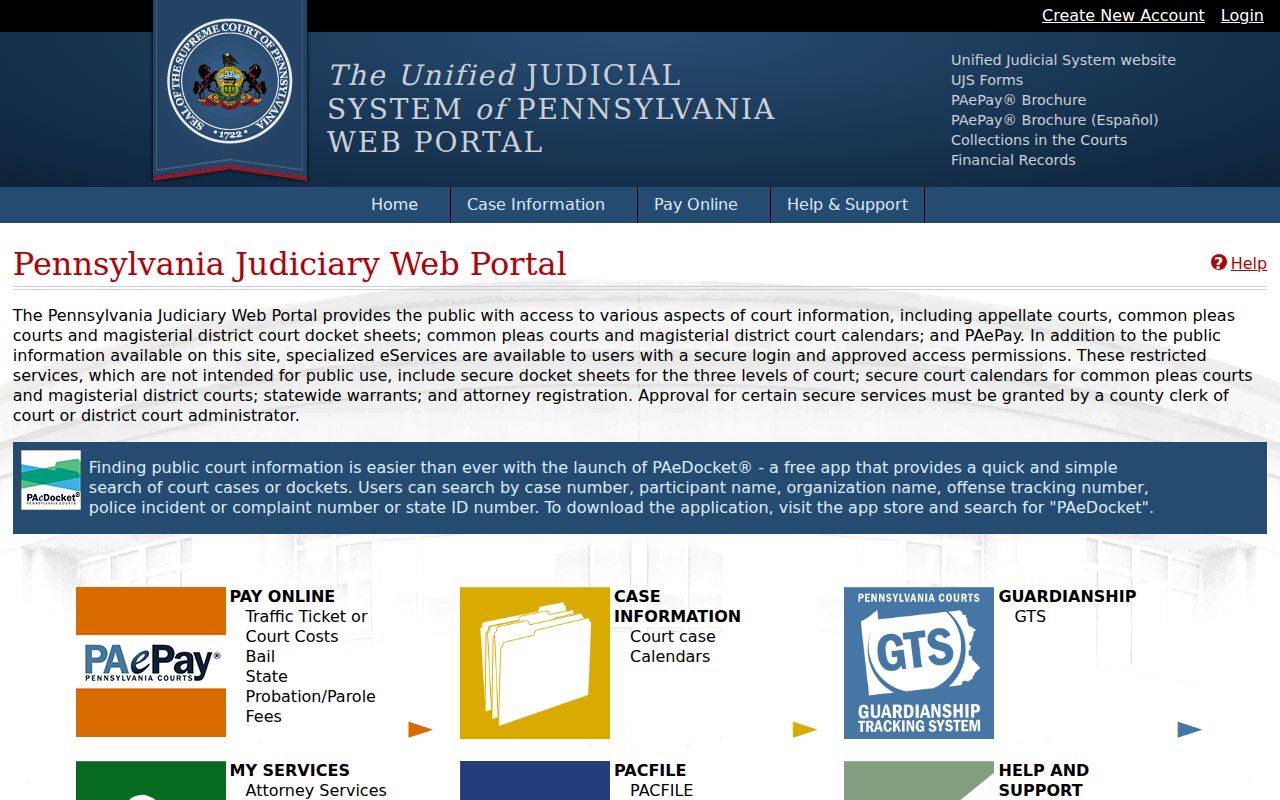
Use the returned county, date, participant role, and docket type as a group. An empty search is not conclusive: juvenile, sealed, expunged, pending-expungement, limited-access, some civil, and destroyed records may not appear online.
Note: A court docket may document a case connection, but it does not by itself establish a person's current address or identity.
Hampden Township Civil Files in OnBase
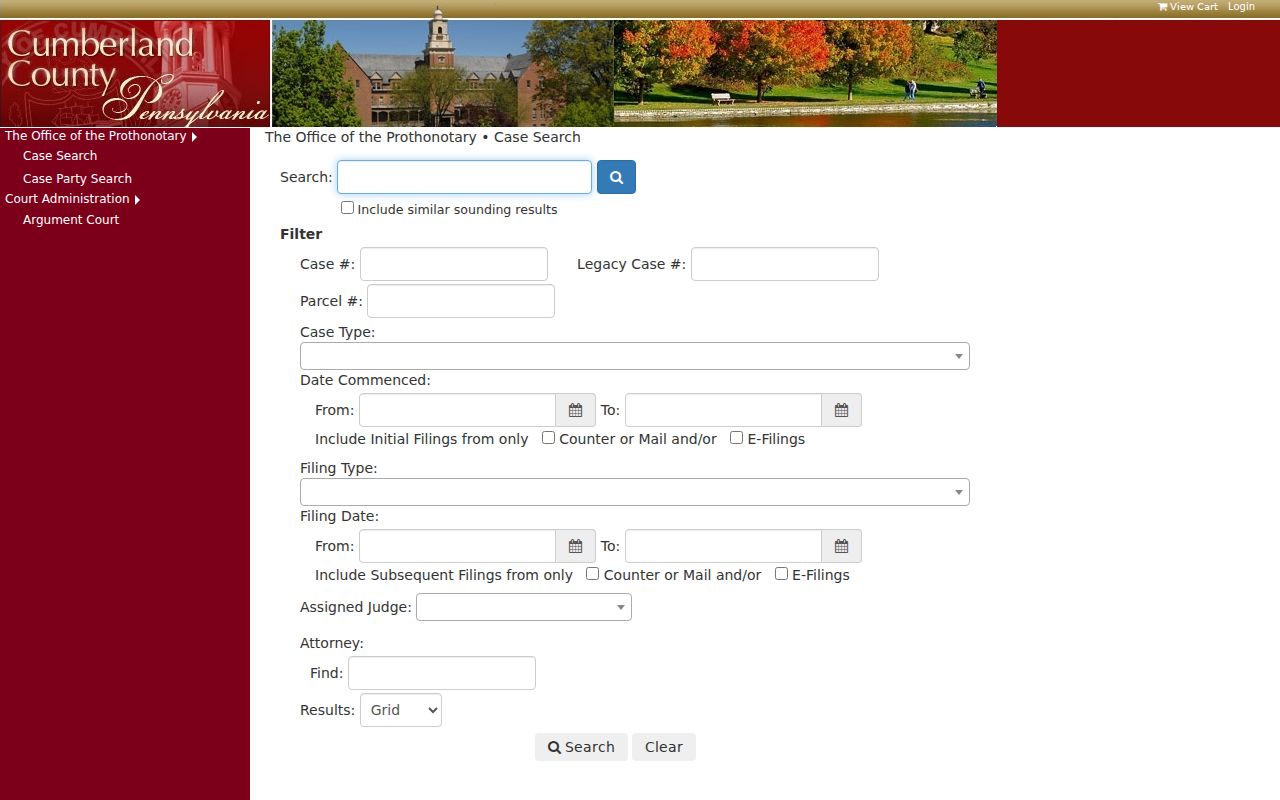
Cumberland's OnBase Web Viewer is a separate civil-record channel. It offers civil files after 1994, with free docket entries and documents at $0.08 per page. Search a case number in the format YYYY-XXXXX, including five digits after the year, or use Case Party Search with a full or partial person or organization name. Those tools are useful after UJS has supplied a Cumberland docket or when a civil party name needs a local check.
The OnBase civil search is pictured here. The viewer allows a public user to locate dockets, add available documents to a cart, and complete payment for viewable pages. An account is optional, though the county recommends one to avoid losing paid views. Purchased files remain in Recently Paid Views instead of arriving by email.
Not all civil material is available on the web. Family cases filed after June 21, 2010 and protection-from-abuse material are excluded. For a public file that is older, restricted online, or needed with certification, use the Prothonotary or the appropriate court clerk. Cumberland lists Court Administration at 717-240-6200 and the Clerk of Courts at 717-240-6250.
Hampden Township Resident Lookup Verification
Use a resident lookup to test a specific connection, not to collect broad personal profiles. One practical method anchors a name to an address or a dated public record and then checks a different source. A deed party should be compared to the parcel PIN or legal description. A court result should be compared to county, filing date, and party role. A historical date can be compared to an estate file or mature vital index. Same-name results remain candidates until the independent details agree.
- Search the exact address or PIN in Property Mapper and record the parcel identifier, situs address, and relevant assessment details.
- Use the name only with a second fact, such as Cumberland County or a date, in UJS or the Landex/Recorder route.
- Compare the land description, docket details, or event date before treating two results as the same person.
- Ask the custodian for an official or certified copy only when its record is the appropriate final proof.
- Docket
- A court's running case record, identified by a case or docket number and listing public filings or events.
- Index and image
- An index helps locate a record. An image is the scanned document itself and may be restricted, paid, or unavailable online.
- Certified copy
- A copy issued or authenticated by the custodian for a record-specific official purpose. It is different from a portal display.
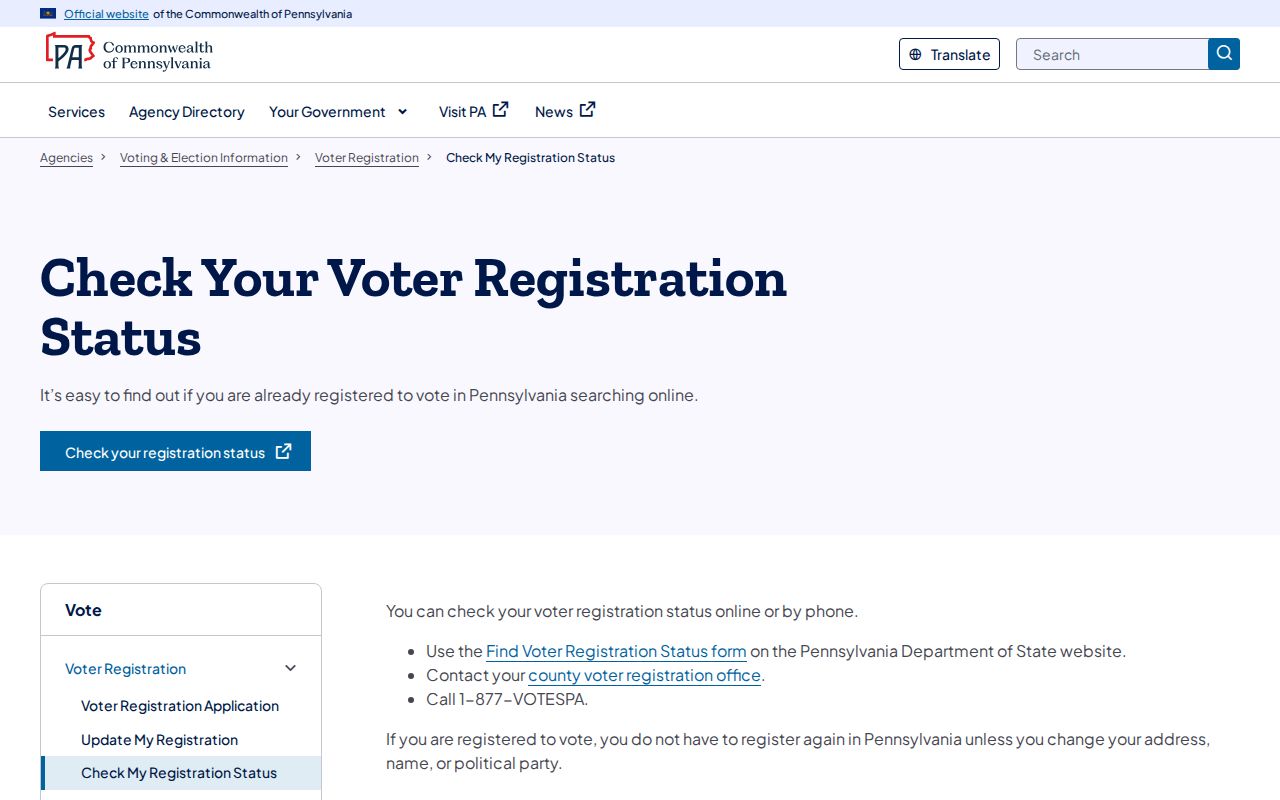
The voter route is also narrow by design. Pennsylvania's status tool checks an individual registration rather than furnishing a neighborhood browser. Cumberland says registration records are public for inspection under election-office staff supervision. A statewide Full Voter Export List request costs $20 under the form's stated terms and requires the certification and restrictions in 25 Pa.C.S. §§ 1207(b) and 1404(c)(2).
The state voter-status route is shown below. Contact Cumberland's Bureau of Elections for the current inspection or request procedure rather than trying to infer another person's status from a nearby address.
When the question shifts from one verified person to the recorded chain along a street, the Hampden Township by-street directory follows the parcel and deed route in more detail.
Hampden Township Vital Record Routes
Pennsylvania began statewide vital registration in 1906. The state divides current certified access from historical research. Birth records move to the public archival route after 105 years, and death records after 50 years. PHMC public noncertified indexes cover births from 1906 through 1913 and deaths from 1906 through 1968. For earlier events, start with the appropriate county courthouse, then consider local church, cemetery, or historical repositories.
Pennsylvania's birth-certificate service describes the active certified route. A standard birth certificate costs $20, and an online order adds a $10 processing fee. The Department of Health accepts eligible requests online, by mail, and at branch offices. Eligibility and identification requirements are specific to the application, so a relationship to the named person should be checked before ordering.
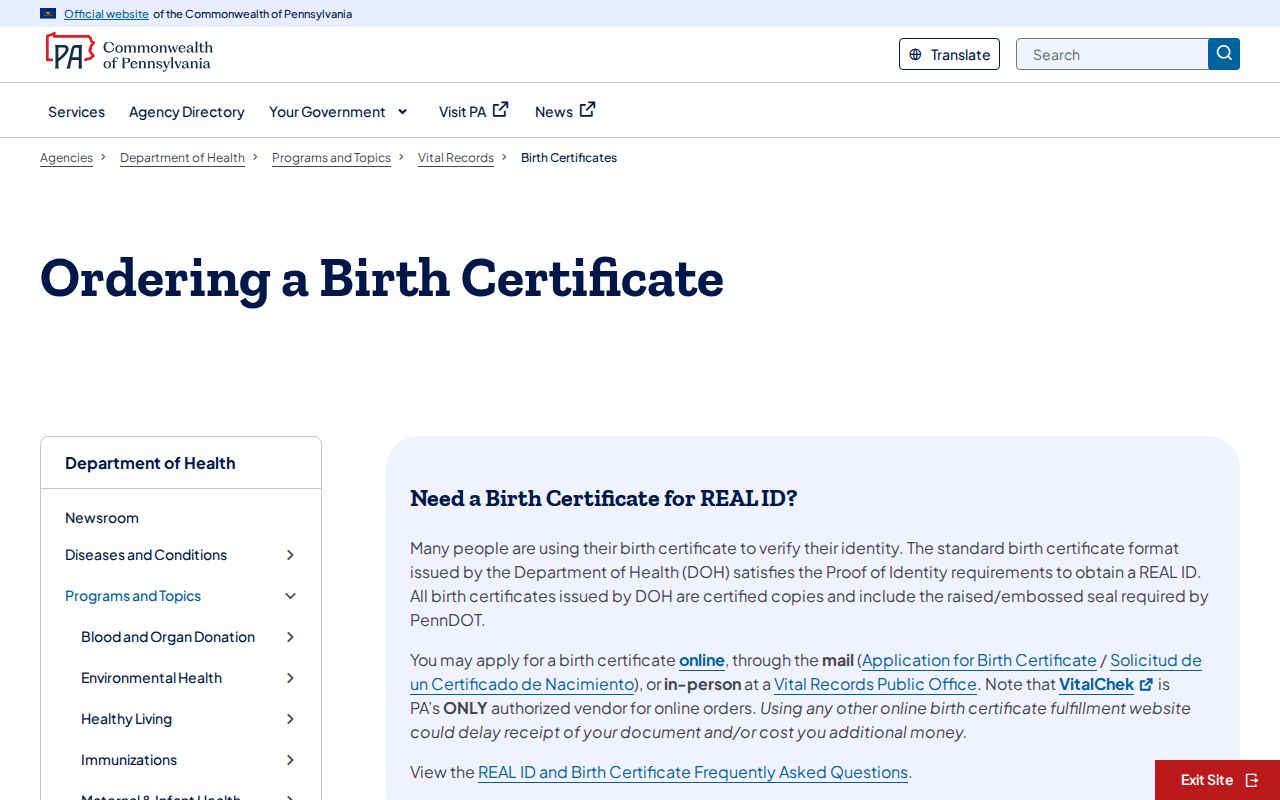
A mature archival record and a current certified certificate serve different purposes. For marriage licenses and estates, the Cumberland Register of Wills and Clerk of Orphans' Court has online records from 1994; older open records require a counter visit. Adoption and guardianship files have separate restrictions.
Hampden Township License and Entity Checks
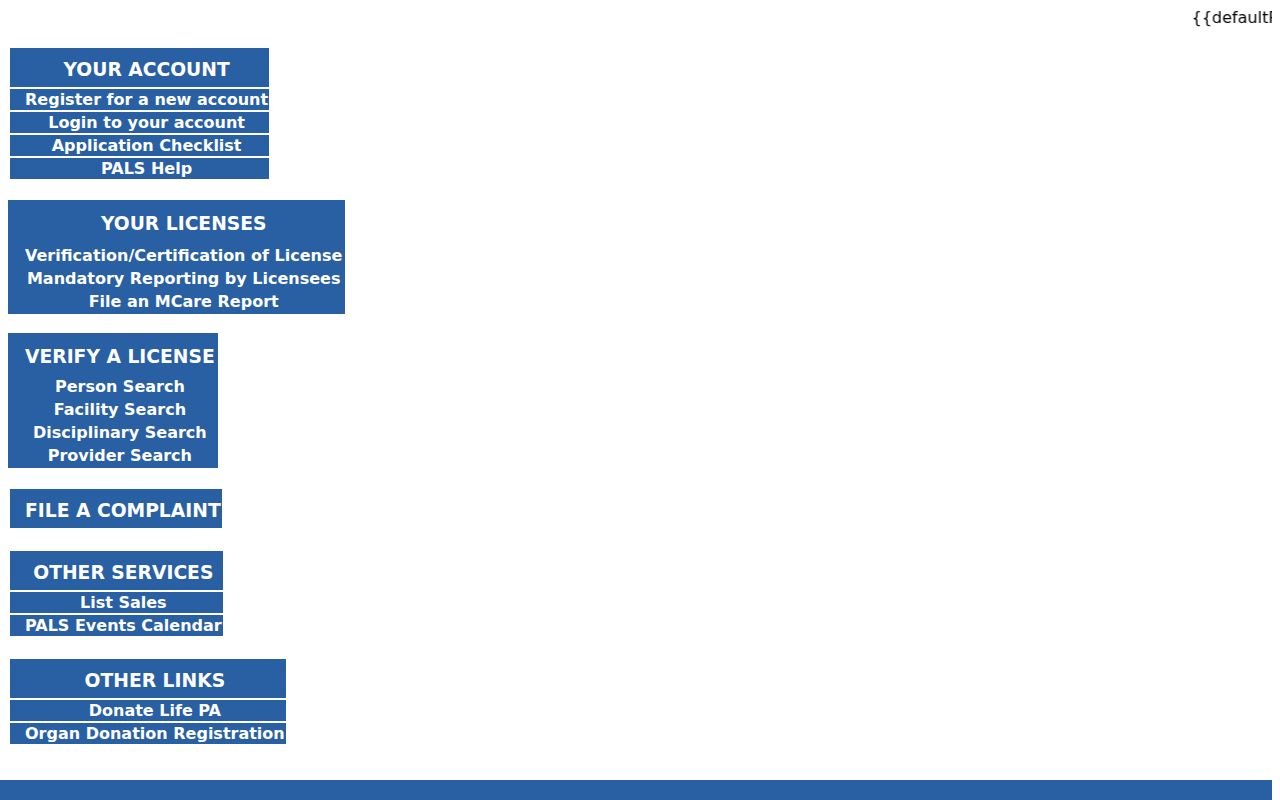
When a name is connected to a credential or an organization, use the state system that keeps that particular record. The Pennsylvania Licensing System, PALS, offers Person, Facility, Disciplinary, and Provider search choices. It can help verify public license status and published discipline information, but a license result still needs the precise name or credential context. The state warns that updates may take up to 48 hours.
The PALS search choices appear below. A precise license search is stronger than matching a common name alone. Keep the credential type and status with the result when comparing it to a court, land, or family-history record.
For registered entities, use the Pennsylvania Department of State business search with the exact entity name or File Number. It is not an officer-name or address index. That boundary matters when a resident lookup has only a person's name and no confirmed organization.
Hampden Township Resident Lookup Limits
Public availability has real limits. Property Mapper is address and PIN based, and it does not establish who makes up a household. A blank UJS search does not prove that no court matter exists. A voter-status result is individualized. Vital certificates are controlled by eligibility. These boundaries protect both accuracy and privacy. When a public record looks wrong, ask its keeper to correct or explain it: Tax Assessment for a property account, Elections for registration data, the Recorder for a recorded document, and the court for a docket or file matter.
Lawful use. Use a Hampden Township resident lookup for personal, lawful research, family history, estate questions, civic context, or a record-specific verification. Do not use information to stalk, harass, intimidate, or harm anyone.
When an existing township or county administrative record is the appropriate source, the Pennsylvania Right-to-Know Law can be a focused fallback. It does not require an agency to create a new list or release material protected by law, court order, privilege, or an exemption. Describe the existing record, request electronic or counter inspection if available, and expect lawful redaction. Agencies generally respond in writing within five business days, subject to the statute's interim-response process.
Hampden Township ACP Safeguards
Pennsylvania's Address Confidentiality Program explains why a public search may not show an ordinary-looking address record. The Office of Victim Advocate administers ACP for qualifying victims of domestic violence, sexual assault, stalking, human trafficking, or child abduction. Participants receive an alternate address and may use it for voter registration, court and state records, driver credentials, school records, marriage licenses, and utility bills.
An ACP participant's alternate address is part of a safety plan, not proof that a record is missing or mistaken. Enrollment is available online or through a local victim-service provider, and participation must be renewed every three years. Respect the protected address and use the Office of Victim Advocate's official channel for program questions. The same rule applies to sealed or limited-access court records: a public portal gap should never be treated as an invitation to search around a protection.
Note: A resident lookup should stop at the limit set by the custodian, privacy program, or court-access rule.